Cookie Mining Experiment
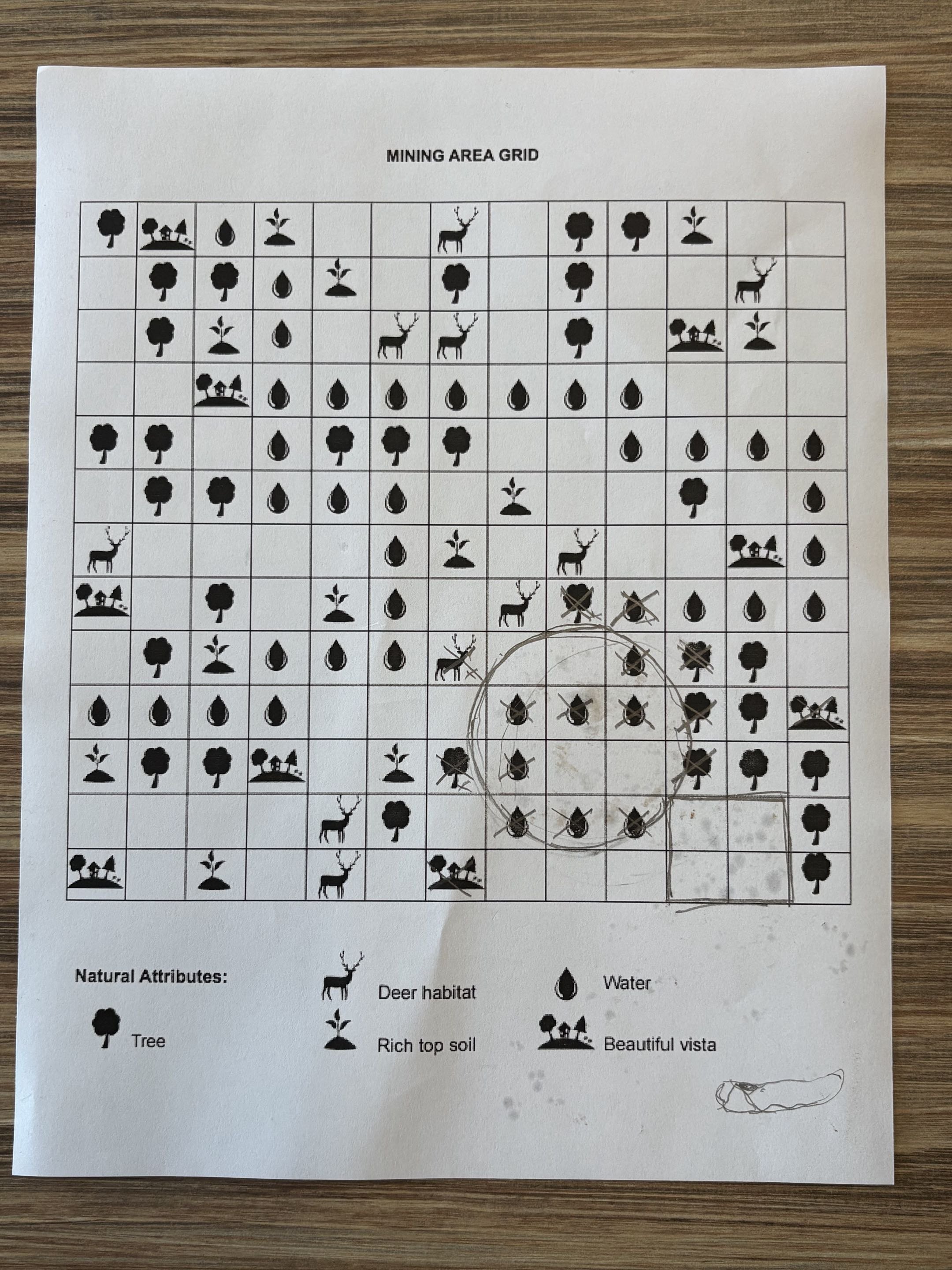
The grid that we conducted our mining on. The circle is where the mining took place, and anything with an x has been polluted by the mine tailings.
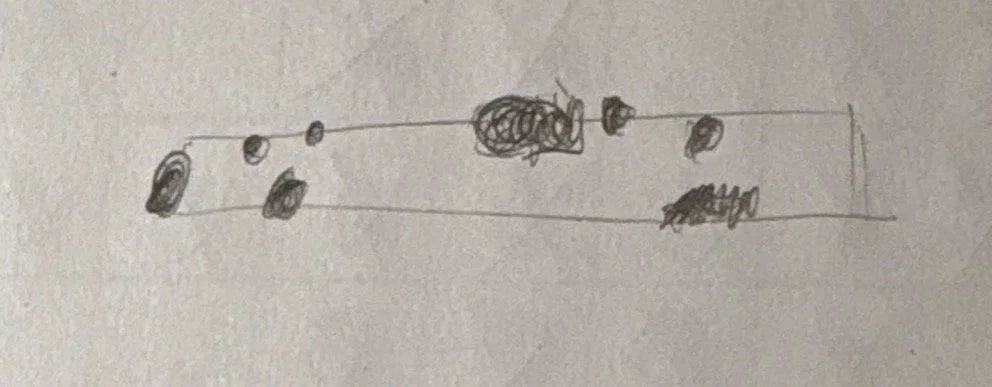
A drawing of the cookie prior to the mining.
Mining allows us to get many minerals that are used in everyday life, such as graphite, lead, gold, and coal. However, having access to these resources comes with a trade-off, as mining has severe ecological consequences. Mine tailings, the unwanted waste material collected from mining, are among the major sources of ecological damage, as they release dust and other pollutants into the environment. These pollutants can pollute water through acid mine drainage, which refers to water that has passed through mine tailings and has become acidic or contains metals.
To highlight the ecological effects of mining, I conducted a cookie-mining experiment in which I tried to “mine” a chocolate chip cookie. When the cookie was mined, little crumbs would release into the surrounding ecosystem and pollute waterways, in turn killing trees and wildlife. Even when I tried to minimize these effects by gathering the leftover crumbs, there would inevitably be some that escaped and got into the waterways. When this occurs on a larger scale in real mining, with dust and mineral particles escaping into waterways, it’s probably even harder to prevent. I never realized how damaging the effects of mining could be, and this experiment showed me that it’s almost impossible to prevent these negative effects.
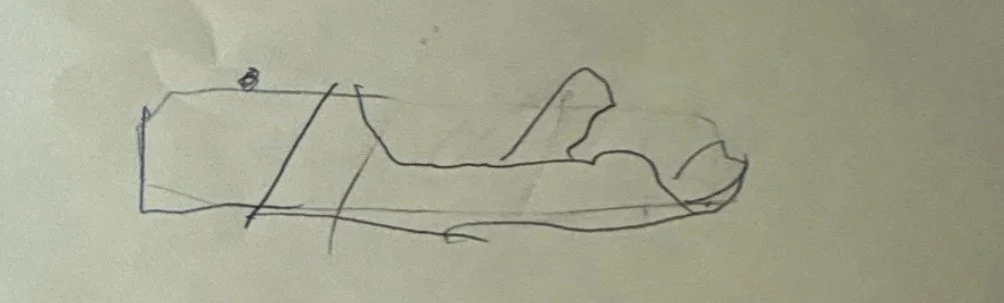
A drawing of the cookie after the mining.