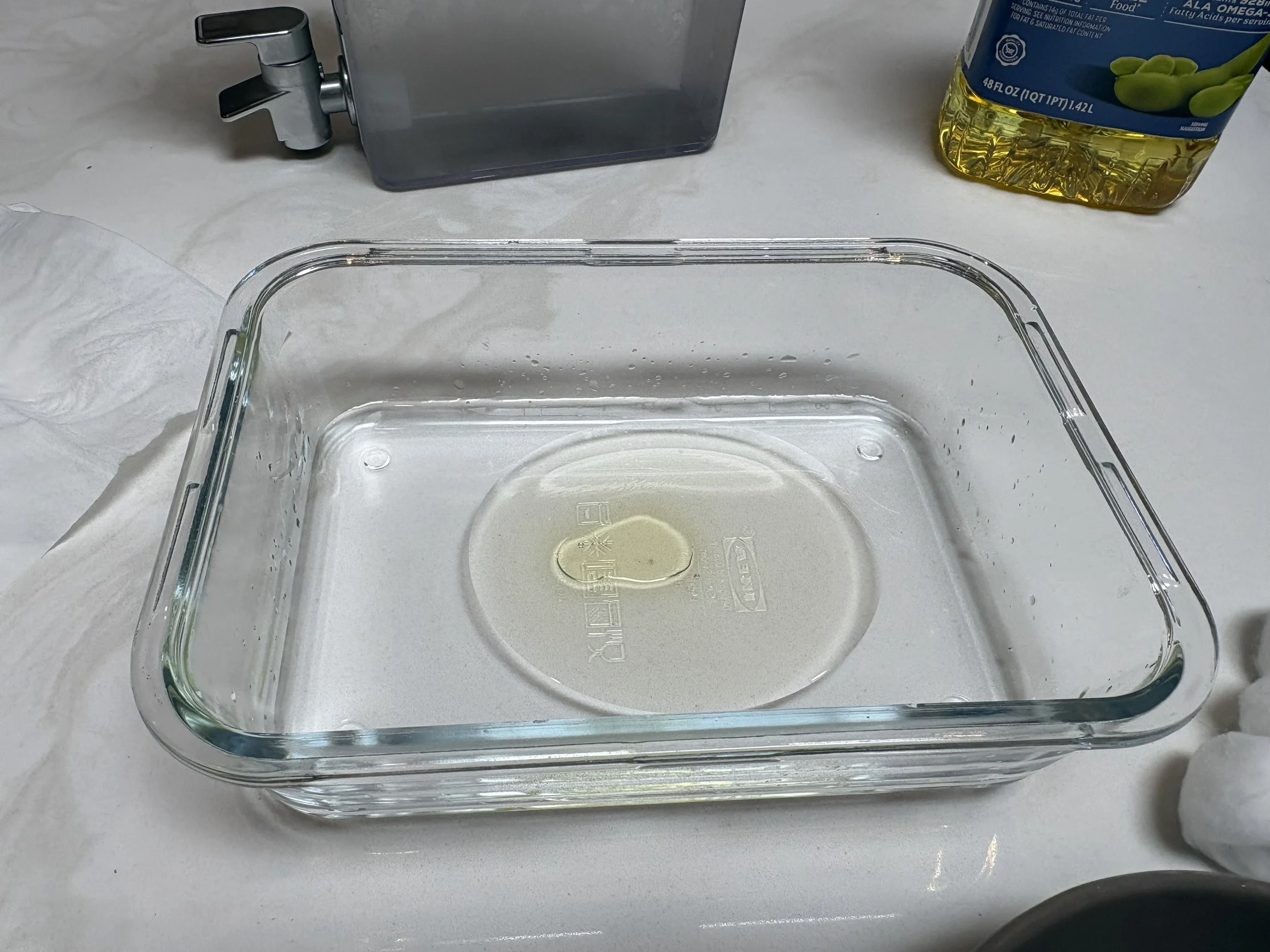
Oil Spill Experiment
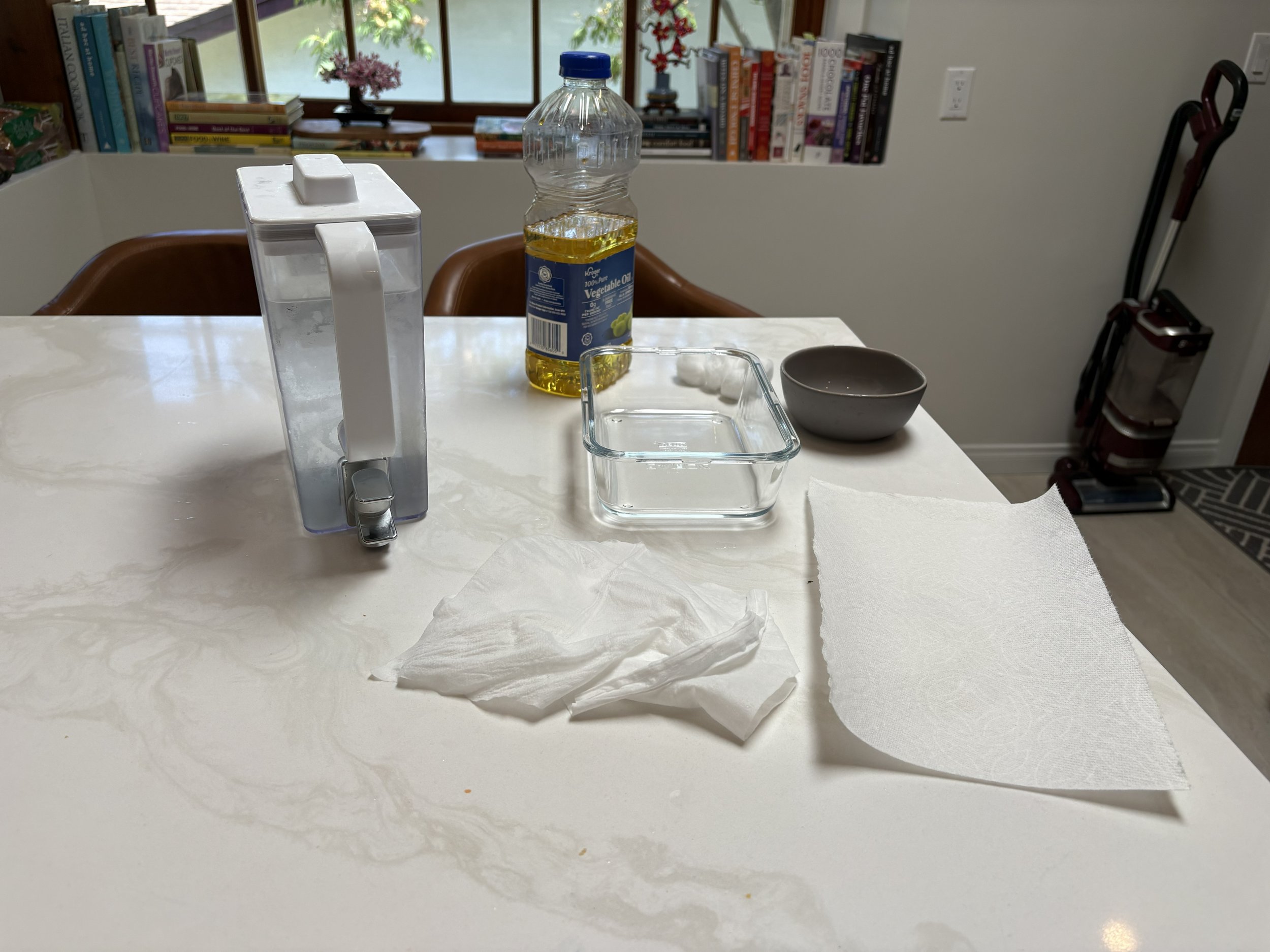
The materials used in the experiment were water, vegetable oil, a glass tray, cotton balls, paper towels, soap, and Clorox wipes.
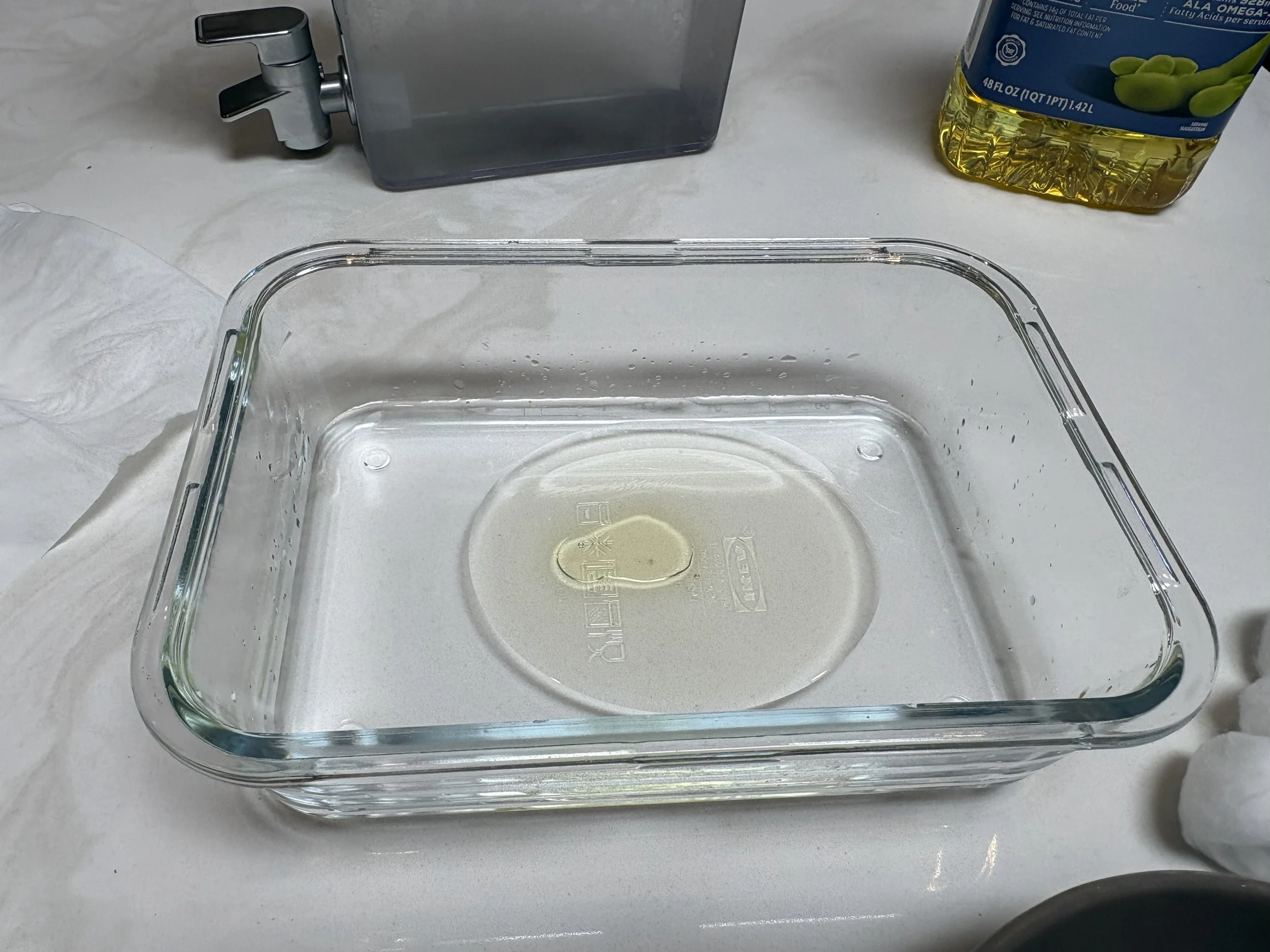
The vegetable oil in the water mimicked an oil spill.
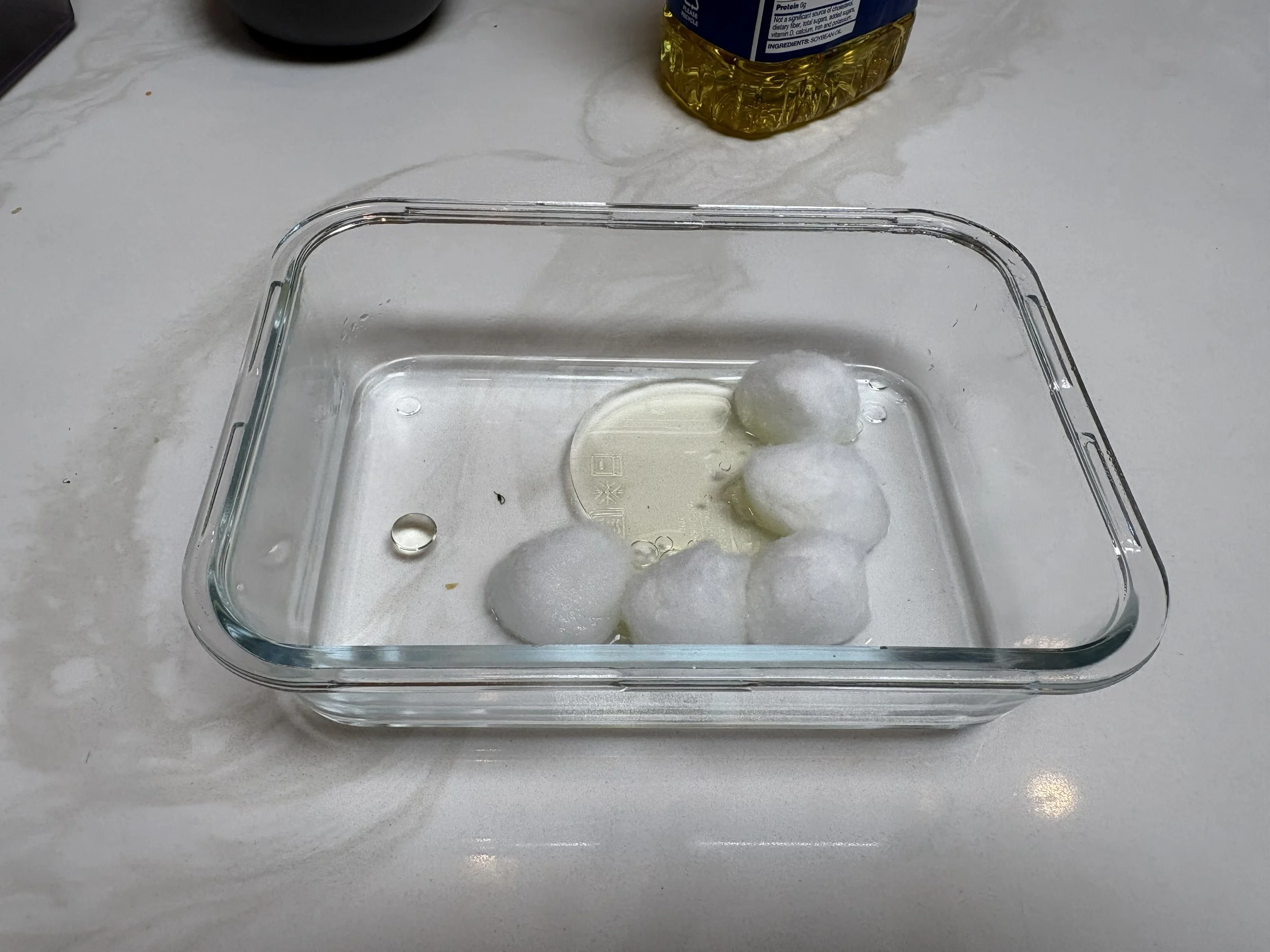
The oil spill when cleaned up with the cotton balls.
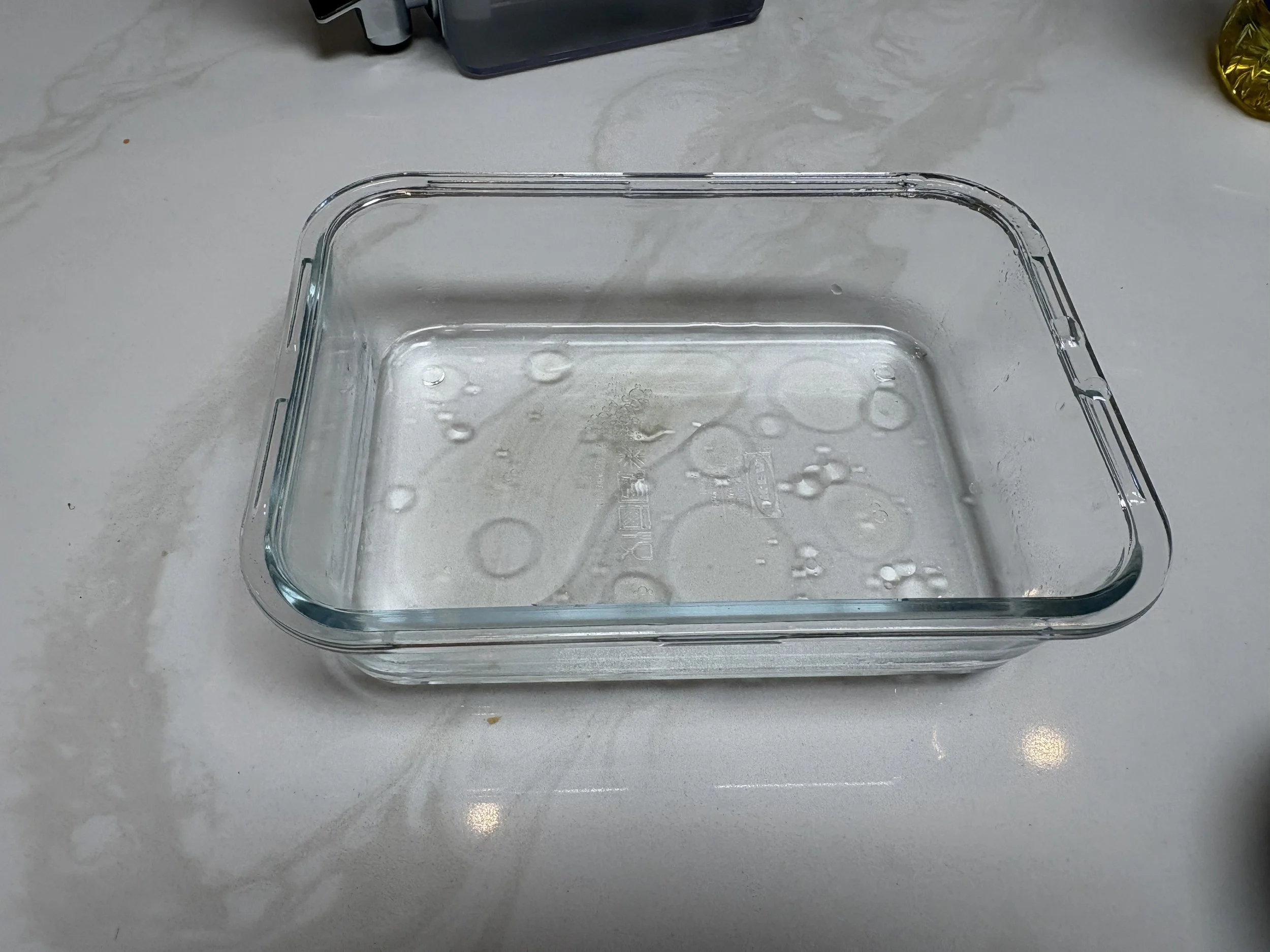
The oil spill when cleaned up with paper towels.
Oil spills are some of the most environmentally harmful accidents there are. Oil can severely harm marine life and ecosystems, as it strips the insulating ability of mammals’ fur and the water repellency of birds’ feathers. Organisms may also swallow or inhale the oil, which hurts their lungs, immune systems, and reproductive systems. Wherever oil drills can be found, there is a possibility of oil spills.
Because of how many oil drills there are, it is crucial that we learn how to clean up oil spills. I wanted to see how difficult it is to clean up oil spills, so I conducted an experiment where I investigated different methods of cleaning oil in water. I used vegetable oil in place of crude oil, and I attempted to clean up a spill with Clorox wipes, paper towels, cotton balls, and soap.
I found that cotton balls were the most effective method for cleaning up the oil spill, as I was able to build a barrier around it with them. By doing this, I (somewhat) prevented the oil from spreading to the surrounding area. The next most effective method was paper towels, as they were able to absorb some of the oil. However, they also split the oil spill into smaller oil spills. The least effective methods were the soap and Clorox wipes, as they just added chemicals to the water. Furthermore, the paper towels and cotton balls absorbed large amounts of water alongside oil, which would make it hard to clean up a large-scale oil spill. This experiment showed me why it’s so difficult to clean up oil spills. It is therefore important that we attempt to prevent oil spills rather than try to clean them up afterward.
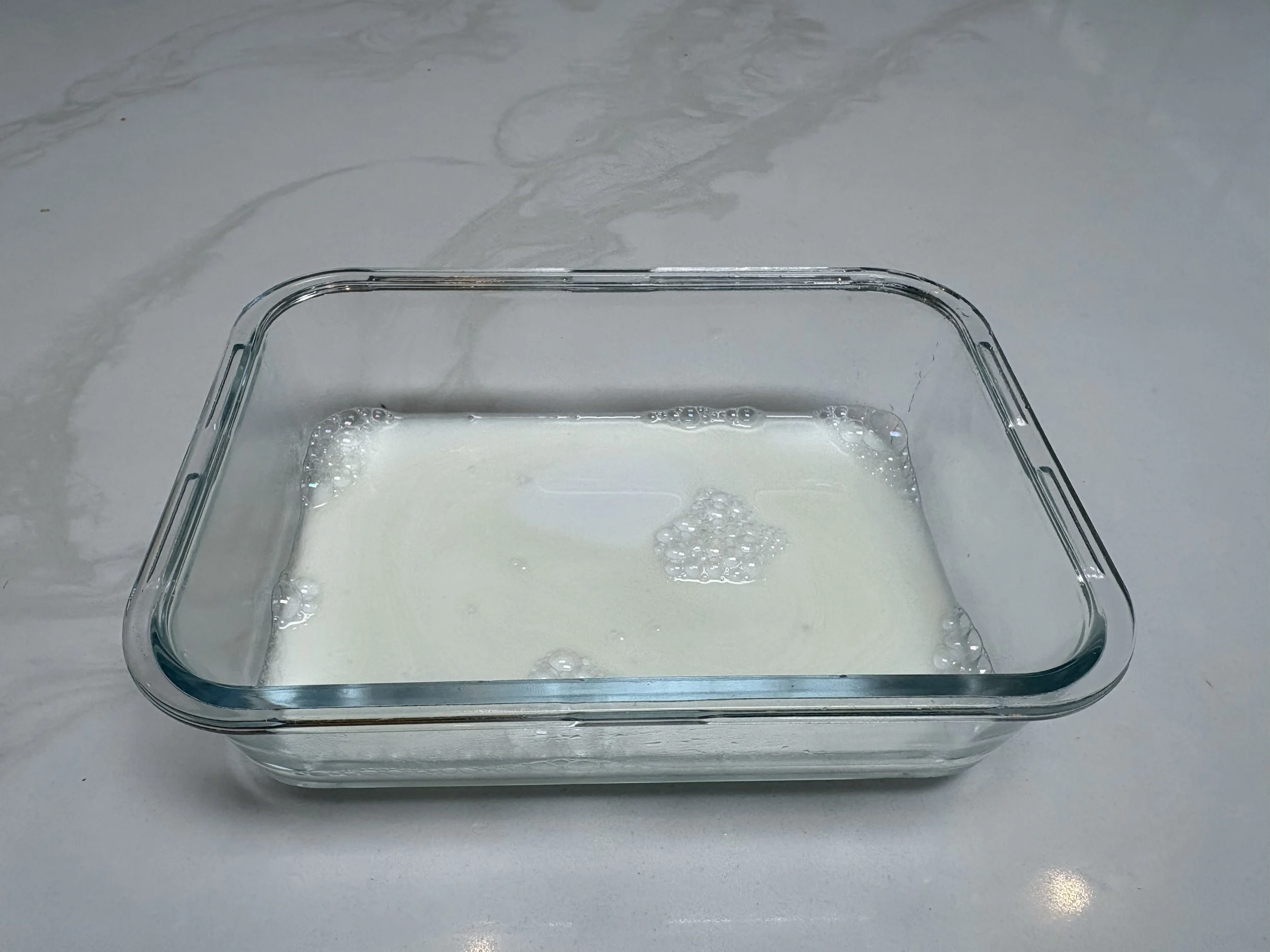
The oil spill when cleaned up with soap.
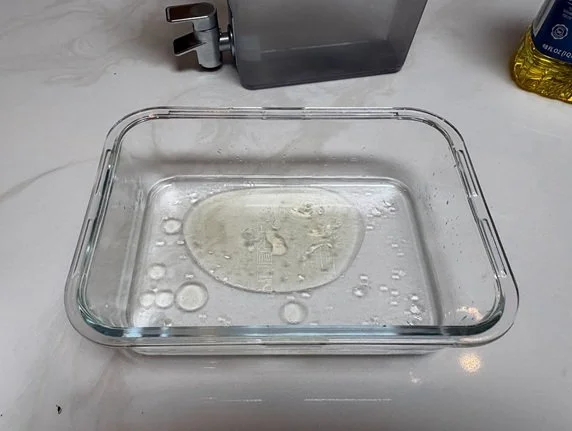
The oil spill when cleaned up with Clorox wipes.